Sunday, November 27, 2011

Garden Cities

A strange coaltion promoting the Garden Cities of Ebenezer Howard is taking place, bringing together the left-wing environmentalist think tank he founded, the TCPA, conservative politicians, and the right-wing think tank the Policy Exchange. New towns that people love to live in, where people walk to work, are involved in the decisions that affect them, and enjoy above average public services. A utopia that could solve Britain's housing crisis, if only someone would make it happen.

The devil, as always, is in the detail. The TCPA, in a report sponsored by developers Land Securities who'd like to build at least two garden cities, supports planning new communities from scratch to provide decent, quality homes for working people, as Howard planned. Long term prosperity should be enabled by putting assets into community ownership - as in Letchworth - with financial provision (service charges? rents?) for the management of facilities. Speculative developers should be discouraged. Land Securities argues for public authoities to release land for development - presumably at knockdown prices - in line with their proposal for 5,000 new homes on MoD land in Medway.

Much of this chimes with the government's agenda. Grant Shapps, the housing minister who represents the people of Welwyn Garden City, hailed Garden Cities in an op-ed written for The Guardian. His plans to release surplus public sector land for up to 100,000 homes by 2015 could be used for large scale planned communities of over 5,000 homes. He even said he'd try and perusade local councils make their unused land available for development. The TCPA's insistence on community-led developments chimes with the government's localism agenda - although community consultation is hardly likely to speed up the planning process (a contradiction inherent in much government policy). The TCPA says the New Homes Bonus could finance schemes in certain parts of the country (TIF, CIL and LEPS are also new instruments that could enable financing and development even in these cash-strapped times.)

However, the real reason for right-wing enthusiasm for such projects was revealed by the Policy Exchange's recent contribution to the debate. It argues that planning rules should be relaxed to allow large scale development on green belt or (more easily) on brownfield land, and should be permitted if less than half of those directly affected object.

A recent tour round Hampstead Garden suburb by a friend who has lived in the area all his life was also revealing. Henrietta Barnet's planned settlement has much to commend it: schools, churches and adult education facilities are run by the community, and a community trust manages land use decisions (in conjunction with the council). Several different architects were employed for the 243 acre scheme, meaning a variety of different architectural styles in a well planned scheme with lots of green spaces. My friend's main complaint was the lack of any local pubs. While neighbourly relations are mostly friendly, the stringent planning rules do occasionally cause friction - apparently the reason for Batman and Robin's presence on this balcony.
However, although the scheme's initial aims were to provide housing for all income groups, no poor people live there now. Some of them are filthy rich: we walked past Jonathan Ross's mansion and ambassadorial residences aplenty. The value of such properties is undoubtedly another inspiration to developers and conservative policy. Clearly there are many different ways of re-imagining the Garden City.

Tuesday, November 22, 2011

Croydon


The walk from Croydon East to the Fairfield Halls isn't endearing: empty buildings, amateurish billboards beseeching someone to fill them, underpasses that smelt of piss and fear. It was my first visit, and I hadn't expected Croydon to live up to its reputation so quickly - in my mind at least. I was in town for the Develop Croydon conference: a private sector initiative designed to showcase the opportunities, and not just the challenges, of the area.

Boris Johnston chose the day to announce a £23 million post riot regeneration fund - and he popped by the conference to hail the imminent arrival of Westfield magic dust (although Westfield Stratford City director John Burton disappointed by saying absoutely nothing about his plans for a Croydon shopping centre) and the "beautiful and brilliant" ladies the area seesms to spawn (Kate Moss etc).

Croydon's biggest problem is dealing with the outdated office stock, a huge proportion of which lies empty. (an interesting panel discussion with new regeneration chief Stephen McDonald spoke of adapting some of these, possibly into schools).

Croydon's chief executive Jon Rouse was insistent that despite the economic climate, the area is ripe for regeneration.

"We are ready for business," he said repeatedly stressing the area's perhaps under-appreciated transport links (accessible in under an hour to 6 million people.

Schemes include Berkeley Homes' Saffron Square housing development in Wellesley Road; Barratt Homes' New South Quarter development in Waddon and Stanhope/Schroders' Ruskin Square homes and offices scheme. Hammerson also revelaed a £50m revampe for its Centrale shopping centre.

Conference participants spoke with horror of his predecessor, hoping that this can-do attitude combined the deregulation of planning and economic pressures will make life easier for developers.

But enticements - such as free parking, trialed in the aftermath of the riots - may be needed to overcome a general London prejudice against the area, which is in competition with Bluewater and other nearby shopping centres.

Friday, November 18, 2011

Dubai


"You don't build a sustainable community based solely on greed. And thats the problem with Dubai."
So said a new acquaintance I met at the Emirate on a press trip to the airshow. The people who come to Dubai (whose 400,000 odd population includes only 1,500 natives according to my guide) come for the money, and nothing else.

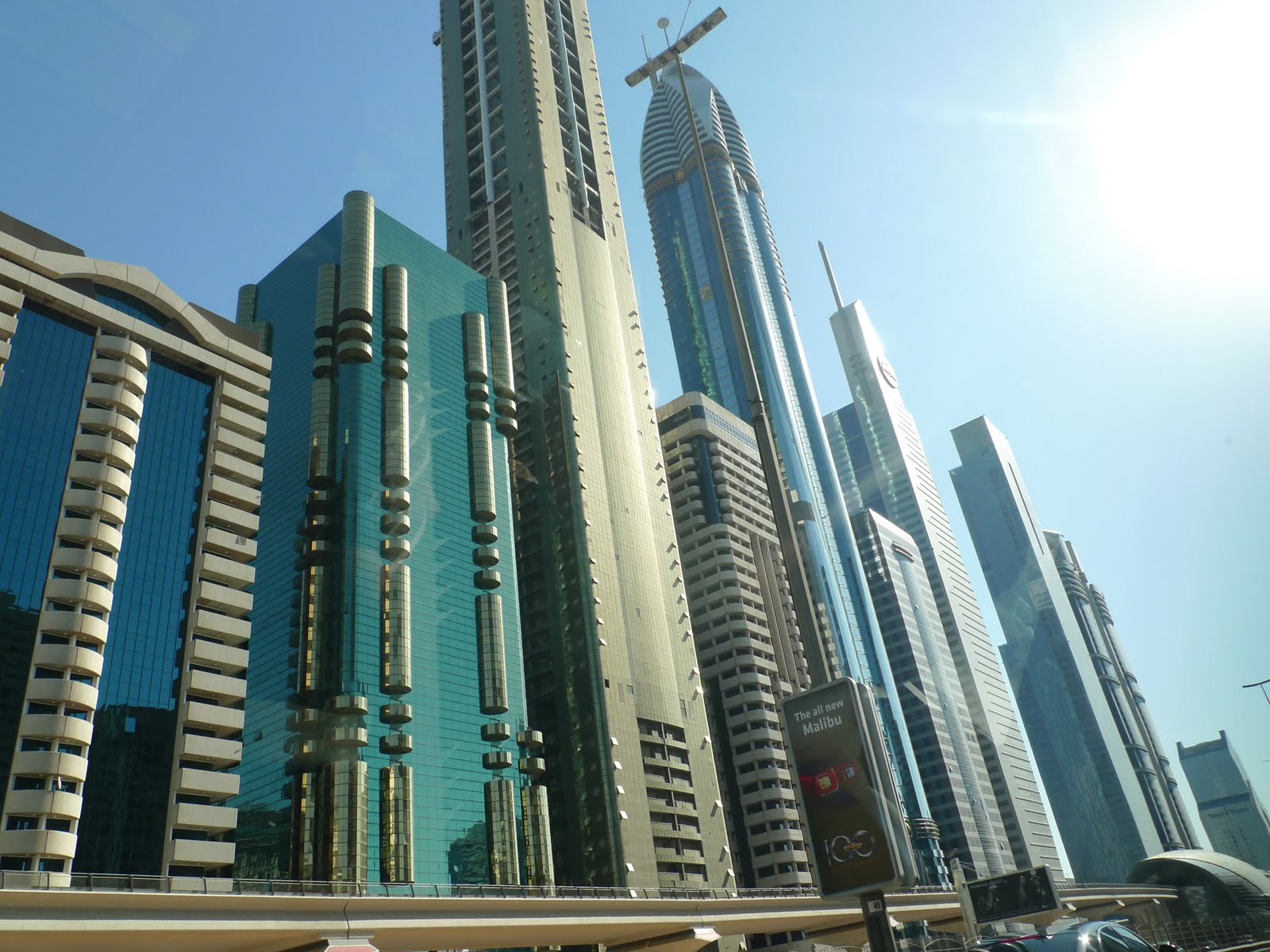
I had expected to be impressed by the architecture (more on that later), but what I have been musing on since I left Dubai is not the buildings, but how wasteful so much of what they are doing there is. Sure it's very pleasant for a break (see me enjoying the reclaimed Palm Resort beach), but it's inefficient to build such big buildings for which there is no need (a local architect told me above 10 storeys in higely costly and inefficient, and not in any way justified by land costs in what is effectively a desert), and yes its quirky to have a ski resort there, but at what cost? Even growing vegetables costs the earth given the scarcity of water in the area.

Dubai wants to show it can do anything better and bigger than anywhere else. And for the moment, thanks to the oil money, it can. The glass chandelier in a hotel lobby (pictured) is bigger than the one at the V&A, but much less tasteful. The acquarium (pictured) in the hotel lobby of the Atlantis houses enormous sharks, sting rays and all host of sub-acquatic creatures - but they are so much more impressive in the wild. The hotels may have five or six enormous restaurants to choose from, with decent food and lavish furnishings, but they still look like Disneyland and lobster is better enjoyed with lemon juice than in a curry. The lavish parties are fun (thanks to Sheikh Mohammed for a fabulous gala dinner with Tom Jones), but possibly boring after a while.

The Burj Khalifa (world's tallest building pictured left) is rather ugly I thought, and Sheikh Zayed Road, the strip where all the big buildings are (pictured right), looks rather disorganised during the day (although the lighting has a certain magic at night). The Emirates buildings and the Burj Al Arab (7 star hotel shaped like a sail on the coastline - unfotunately the photo I took is from the road but it looks much better, magical even, from the sea) do have a certain beauty to them, but they are in a minority.

Recently, the authorities have discovered the importance of history (and culture) and efforts to save the old Arab trading quarter are underway. There's a very worthwhile museum in the old fort, which explains the efficiency of the traditional air conditioning systems (wind towers) in the pre-oil era. Ships from Somalia were docking in the port when we took the 1 dirham boat across the creek, a reminder of eras past.


You'd have thought that with the power the local authorities have, planning would be easy. But a friend tells me there is no organisation or structure. The main interchange with Abu Dhabi has apparently been rebuilt three times.

I couldn't help thinking that when the oil money runs out, the winds will sweep the sand back over all this garguantuan edifices and someday in centuries to come, people will look at them like we do the pyramids and think "what were they doing there?"

Tuesday, November 15, 2011

Tawazun Disaster Management City


At the Dubai airshow my attention was attracted by a large-scale city model which appeared to be on fire. The Tawazun Disaster Management City is just another of those jaw-dropping planned developments of the region, which men in long white shirts swear they still have funding for. Its billed as a training facility spead over 400,000 square metres, where past and potential future crises are reenacted including natural or man-made incidents such as earthquakes, building collapses, explosions, fires, flooding, oil spills, health epidemics, marine rescue and several others. It's sad to think the state of the world could be such that there is sufficient demand for such a service to make it financially viable.

Wednesday, November 9, 2011

A day of two halves: City Development vs Tent City


I spent the morning listening to property developers and council officials vaunt the merits of The City. According to Peter Rees, the long serving planning officer for the City of London, success is down to two factors: the Big Bang (or deregulation of financial markets) and him. He might well have succeeded in making the City richer in the past 25 years (and not just in modern architectural heritage), but I'm a bit worried about his argument going forward. Frankfurt and Dubai aren't serious competitors, he said, because no matter how many tall buildings you put there, they will never be the destination of choice for a dirty weekend. Given the makeup of the audience at the NLA conference, I'd say Mr Rees is used to speaking to a mainly male audience.....

But I quite liked him. He was certainly the most entertaining speaker of the morning. Others were more modest. Iconic buildings are going out of fashion, said Martin Jepson, SVP at Brookfield, and the focus for development going forward will be smaller, with a focus on the interior rather than the exterior: boutique offices for boutique clients said Richard Taylor, head of commercial at EC Harris. Ken Shuttleworth said the era of glass is over. Throughout the morning I noticed that 'SME space' seems to have replaced 'mixed use' as the new buzzword.

Cycling back from the all day conference, which finished with a tour round the London Fruit and Wool Exchange (a one-time haunt of Jack the Ripper which Exemplar and the City of London are hoping Tower Hamlets approve for a 320,000 square foot office and retail scheme), I stopped by Paternoster Square, where student protests had joined Occupy London. After a day of suits, it was a refreshing contrast. The protestors have got organised, with a cleaning rota to ensure the good folk of St Paul's are no longer upset by finding human waste desecrating the steps of the church ('Dirty Protest Soils St Paul's in last weeks Sunday Times) and a Tent City university, where debates on capitalism and much more (involving the Guardian's Polly Toynbee - and I understand some brave City types) offer free education - and a chance to speak up - for whoever stops by. I even spotted a few suited types peering into the Information Tent (and I read a great story on the plane about a drunk copper spending the night in a tent, thanks the hospitable protestors).

That's one of the things I love about London. I spent the day hearing City types talking about how to make themselves richer (note: their meeting was closed doors), and a few minutes down the road, crowds are gathering to debate how these riches should be shared. If this last image is to be believed, something (or rather someone) is needed to make the debate that much richer (although I think they are missing an 'm')

Monday, November 7, 2011

Making more of The Thames

I attended the first in the series of Centre for London's Thames seminars, this one devoted to making the river more environmentally sustainable. Peter Bishop, formerly of the LDA and now with hosts Allies & Morrison, said the river is less of a transport artery these days and more of a barrier to north-south movement, calling for a re-think of the policy of making it accessible to big ships. Mathew Frith, Deputy Director of the London Wildlife Trust, spoke for the 'creatures that don't have a vote' such as cormorants, voles, tentacle lagoon worms, little egrets, mussels and even - if Nichie Jenkins from the Port of London Authority is to be believed - grey seals. And Dave Wardle of the Environment Agency spoke of how global warming and rising sea-levels may mean by 2050 we may be talking about building a second Thames barrier (estimated cost now £6 billion) to protect London from flooding.

The ecology of the Thames may be fascinating for people who're into that sort of thing - and its certainly wonderful that wildlife is thriving in such a busy city. Coming up, the Thames as a transport corridor, public amenity, centre for design and development, and The Thames Estuary.

Friday, November 4, 2011

A day out with Heritage of London


What have a dilapitated terrace in Hackney, a 14th century pub in Newham, a bombed out military church in Woolwich and a concrete house in East Dulwich have in common? All are buildings at risk, and the Heritage of London Trust is battling to save them. To that end, it took John Howell, MP, an adviser to Minister for Cities Greg Clark, and officials from the National Lottery Trust, the Prince's Regeneration Trust and others on an afternoon bus tour, on which I hitched a ride.

Despite the (rare) presence of a Tory MP in red Hackney, there was quite a turnout to welcome us, from the Lord Lieutenant to the cabinet member for planning. At sta
ke is a falling down terrace in Dalston Lane. Apparently, the site was sold by the council to developers in 2002, but permission to demolish the terrace was refused because English Heritage found the houses to be "remarkable suvivors of Georgian architecture". The council then declared the terrace a conservation area in 2005, but since then nothing much has happened except the occasional building burning down....

Next up was the Spotted Dog pub, the second oldest building in West Ham and possibly once the kennels for Henry VIII's hunting dogs... Before seeing it, I was skeptical about its viability given that finding a modern day use for a pub in a mostly Muslim area is not going to be easy. But the building has serious charm, a mix-matche
d warren of seriously old 14th century timber frames, and modern ye-olde style fibreglass. It does have a feel of history about it, and it would be a shame for it to go. Interestingly, the architect that is working on the Spotted Dog is the same who brought the St John's Tavern in Archway back to life. Quite a coincidence then that a few weeks I was dining there with a friend, who remarked on how the renovation of the St John's had sparked regeneration along this rather sad stretch of North London.

The jewel of the visit, however, was St George's Chapel in Woolwich, still the church for the Royal Artillery Regiment and right next door to the Olympic shooting venues. Hit by a flying bomb on 13th July 1944, only the apse remains, housing an exquisite golden mosaic of St George and the Dragon. When we visited, it was being protected by a crinkly roof, but funds have been secured and this was shortly to be replaced with a more permanent roof structure. Plans are also afoot to install catering facilities, which would allow the garden to be used for corporate functions during the Olympic Games. It's an elegant and strangely peaceful place, to me reminiscent in some way of the ancient ruins of Pompei. The Olympics affords an opportunity to amass some cash, but the long term future will depend on the community rallying round to care for it.

Finally, we visited Britain's oldest concrete house in East Dulwich. A rather ugly building, I thought: it's gothic architecture was behind the technology. Fans claim it should be saved for the nation because the 1873 building was a technological frontrunner - and if only Britain had followed through, the Americans and the French wouldn't have stolen a lead on concrete construction.

All in all, what was interesting about the day was the energy and ethusiasm that Heritage of London, local residents, council workers and others put into saving some of the treasures from our past. A mostly thankless task, they won't scrabble together enough money to save everything, but how wonderful that they try. Not all of the buildings will - or perhaps should - be saved, but the world and Woolwich would be a poorer place if this marvellous mosaic, which had been left to the elements, were allowed to crumble.